What Is Confidential Crypto & How Zaïffer Delivers It: 7 Privacy Tips for Encrypted Finance
A look at how Zaïffer brings practical privacy to Ethereum by encrypting only transaction amounts — not users, tokens, or activity — enabling confidential transfers, swaps, payroll, and lending on existing chains and wallets. Instead of forcing people onto new privacy chains or UX paradigms, Zaïffer uses FHE to make balances private while keeping compliance simple, unlocking a realistic path to mainstream on-chain confidentiality.Follow upCan you explain how FHE works in more detail?What is an example use case for Zaïffer in a financial institution?How scalable is Zaïffer for mass adoption?

.png)
If you’ve spent time transacting on-chain, you’ve probably felt that strange mix of empowerment and exposure. Ethereum gives you global execution, open rails, permissionless access, and then casually leaks your financial life to anyone curious enough to look.
A simple payroll transfer becomes gossip fuel.
A treasury move becomes alpha for competitors.
A whale swap becomes a buffet for MEV bots.
Blockchains were supposed to make finance fairer, but somewhere along the way we accepted a status quo where every transaction is permanently public: salaries, strategies, allocations, everything.
For years, people assumed this was unsolvable without sacrificing usability or compliance.
Then Zaïffer arrived with a different idea: don’t hide the participants. Encrypt only the amounts.
And suddenly, a whole new universe of practical, compliant, confidential crypto becomes possible.
Let’s walk through how we got here.
The Problem: Transparency Turned Into Vulnerability
Public blockchains were born in the spirit of transparency. No hidden liabilities. No opaque ledgers. No silent rehypothecation. That ethos still matters, especially for institutions and regulators.
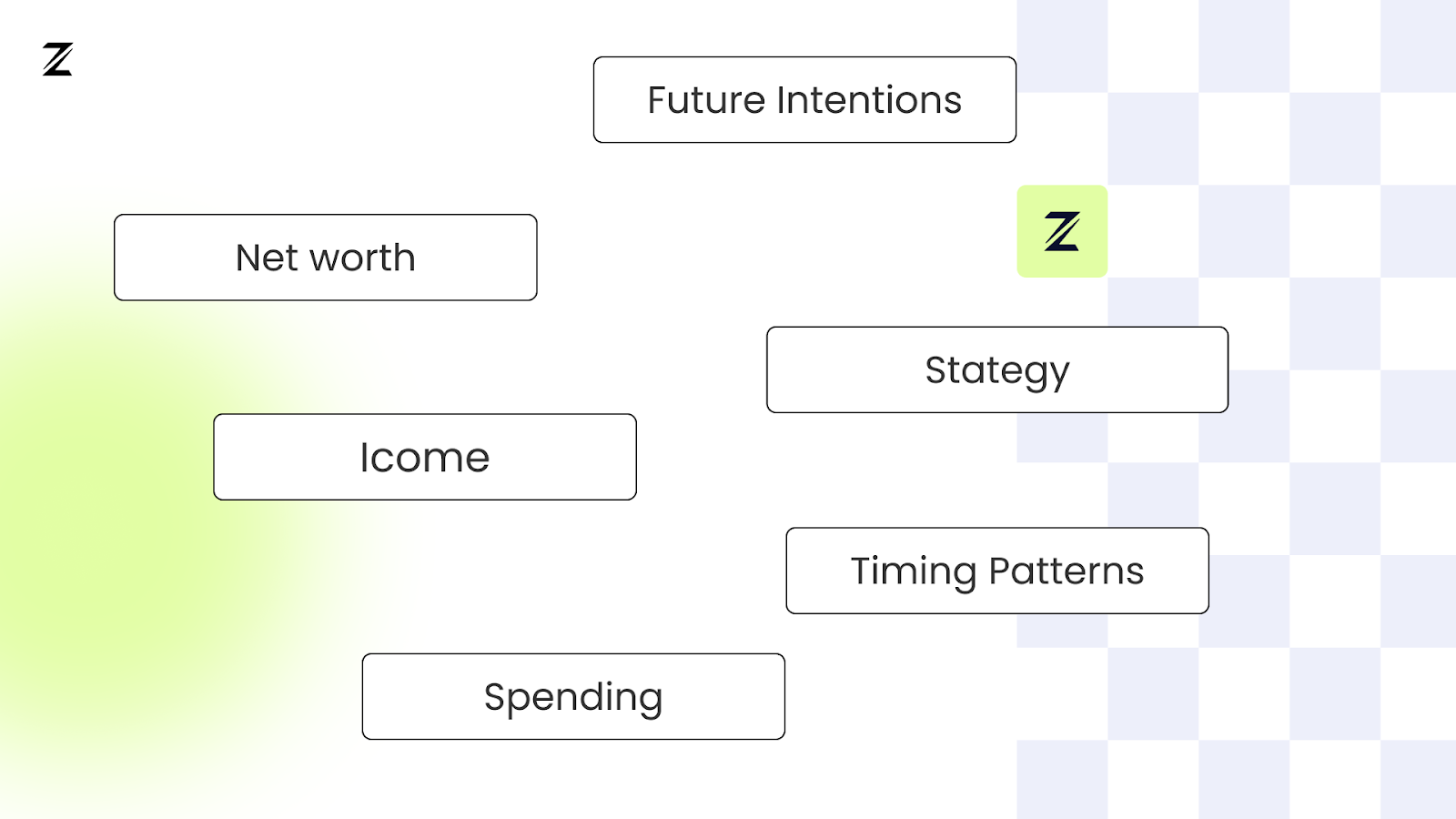
Whether you’re a trader, a business, a DAO, or just someone with a wallet, public amounts reveal:
- net worth
- strategy
- income
- spending
- timing patterns
- future intentions
We’ve built a financial system where privacy is an afterthought and exposure is the default.
People didn’t stop needing privacy. They just stopped believing blockchains could provide it without breaking everything else.
Why ZK Privacy Never Reached Real Adoption
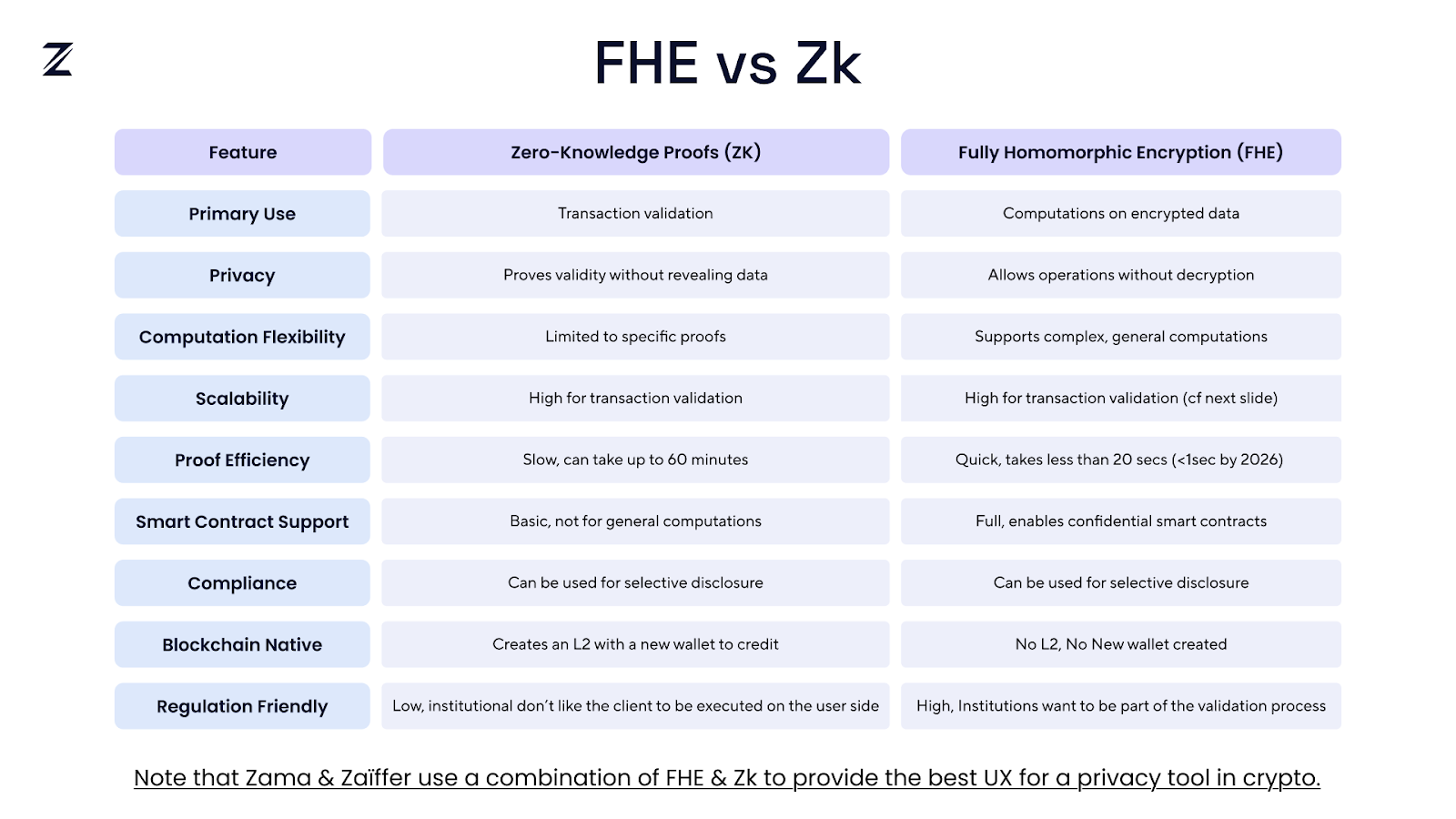
Zero knowledge systems are powerful, but when used for privacy, they’ve always asked for one thing users can’t give: a full lifestyle change.
To use ZK-based privacy today, you typically need:
- a new L1 or L2
- a new address format
- a new wallet
- a new UX paradigm
- new tooling or SDKs
- new trust assumptions
- new liquidity ven
It’s like saying, “Sure, you can have privacy but you’ll need to move to a different country, learn a new language, and leave all your contacts behind.”
For most users (and all institutions), that’s a non-starter.
The result? ZK privacy chains became impressive technical demos… with adoption ceilings they couldn’t break.
This is where Zaïffer takes a radically simpler path.
Zaïffer’s Breakthrough
Encrypt the Amounts, Keep Everything Else Familiar
Zaïffer doesn’t change how blockchains work. It doesn’t ask users to move assets somewhere exotic. Instead, it applies Fully Homomorphic Encryption (FHE) to the one piece of data that actually needs protection: the value.
Everything else (sender, receiver, token type, transaction graph) stays fully visible.

This gives users the best of all worlds:
✔️ Privacy where it matters: Balances and amounts remain encrypted at all times.
✔️ Traceability where it’s needed: Sender/receiver visibility keeps compliance painless.
✔️ Adoption with zero friction: Same wallets. Same chains. Same tokens. No migration. No new mental model.

If you can use MetaMask, Rabby, or Ledger, you can use Zaïffer.
How it actually works
When you “shield” a token:
- USDC → cUSDC
- WETH → cWETH
- WBTC → cWBTC
These cTokens behave like standard ERC-20s (transfers, swaps, batching), but with all values encrypted inside.
Imagine a glass box: you see who hands it over, you see who receives it, but you have no clue what’s inside.
That’s the heart of Zaïffer.
What You Can Do With Zaïffer (Right Now)
Shield Any EVM Token Into a Confidential Token
This is the first superpower people fall in love with: you can take almost any ERC-20 on any supported EVM chain (USDC, WETH, wstETH, OP, ARB, APE, whatever) and instantly convert it into its encrypted counterpart (cUSDC, cWETH, cAPE, etc.).
Same token, same behavior, but the amounts are fully encrypted. It’s the on-chain equivalent of slipping your finances into a sealed envelope.
Confidential Transfers
Send someone funds without showing the entire world the amount. Perfect for payroll, contractor payments, invoices, reimbursements, or simply… being a normal human who doesn’t want to broadcast their finances.
Confidential Swaps
Trade without leaking size.
Whales stay private.
Funds stay uncopyable.
Bots stay blind.
Group Transfers
Payroll, grant distributions, or multi-party payouts handled as a single encrypted operation — clean, tidy, and confidential.
Confidential Lending
Deposit into ERC-4626 vaults, Morpho, Aave, or other yield strategies without revealing:
- deposit size
- yield amounts
- position movements
Strategies stay private; regulators can still verify via selective disclosure.
Selective Disclosure When Needed
If an auditor or partner needs proof, you can grant temporary access to encrypted values — no more, no less.
7 Pro Privacy Tips for Zaïffer Users
Even with encrypted amounts, smart habits create stronger privacy. Here’s how to maximize your confidentiality:
1. Keep your unshield addresses clean: Unshielded tokens return to the public blockchain state. Using fresh wallets helps avoid correlation.
2. Consider timing when unshielding: Even with encrypted values, timing patterns can be informative. Spread them out if possible.
3. Prefer common cTokens for base activity: cUSDC, cDAI, and cWETH blend into larger flows, naturally increasing privacy.
4. Let swaps perform natural obfuscation: Confidential swaps, especially batched ones, break the most common on-chain heuristics.
5. Use confidential transfers instead of unshielding: If you can stay inside the confidential layer, do it. This keeps your financial footprint quiet.
6. Keep operational workflows inside Zaïffer: Payroll, refunds, contractor payments; these benefit massively from encrypted values.
7. Use selective disclosure sparingly: It’s powerful, but only when used intentionally.
The Bigger Picture
Zaïffer doesn’t reinvent crypto, it fixes one of its foundational blindspots.
- No new L1 or L2 to migrate to
- No new wallet to download
- No new paradigm to learn
- No loss of verifiability
- No tradeoff between privacy and compliance
Just encrypted values, on the chains we already use, in the wallets we already trust.
The most transformative technologies are the ones that feel obvious in hindsight.
Zaïffer is one of them. A quiet revolution that makes crypto finally behave like the financial system it’s meant to replace: powerful, global, permissionless… and private where it counts.

.png)